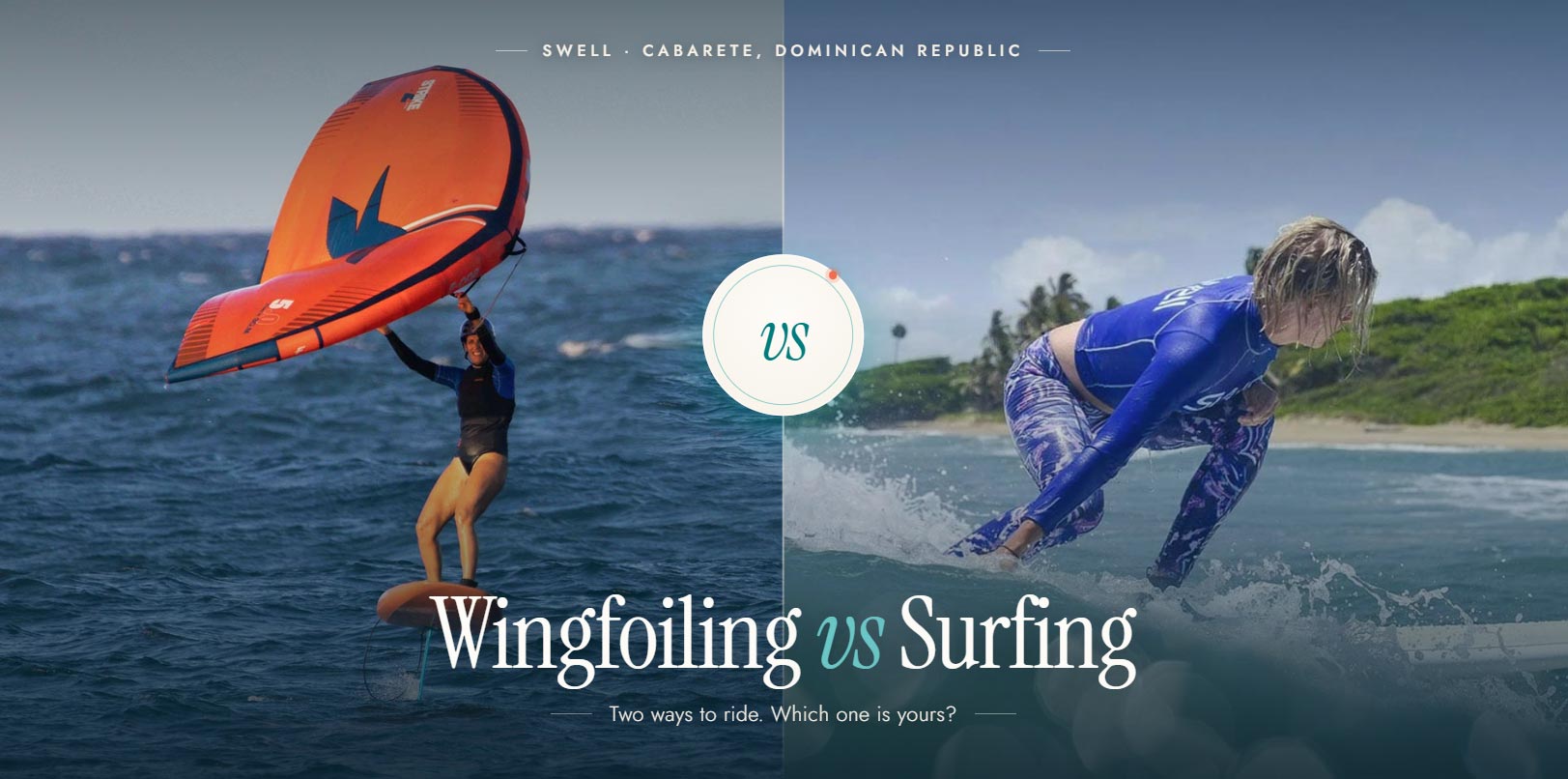
Most comparisons of surfing vs wingfoiling are written by people who sell gear for one of them. We teach both, side by side, at the same beach, to adults who mostly arrive having done neither. That gives us a fairly unusual vantage point on which one suits which person, and where the honest trade-offs sit.
This guide covers what each sport actually demands of you, how the learning curves really compare, what it costs to get started and keep going, and the question we get asked more than any other: whether it makes sense to learn both in the same week.
The 30-second answer
Choose wingfoiling if you want a fast, dramatic result and you have wind. Choose surfing if you want a cheaper start, a lifelong craft and access to waves. Wingfoiling rewards patience with balance; surfing rewards patience with everything. Neither requires strength or youth, and neither requires having done the other first.
Surfing vs wingfoiling: the head-to-head
Here is the comparison stripped down to the things that actually change your decision. The figures are for a complete beginner in good conditions with real instruction, which is the only fair basis for comparison.
| Surfing | Wingfoiling | |
|---|---|---|
| Cost to start | $300–600 Soft-top, leash, wax |
$2,500–3,500 Wing, board, foil, pump |
| First success | Standing in whitewater, day 2–3 | First short flights, day 2–4 |
| Riding independently | Months to a few years | Roughly 8–15 hours of coaching |
| Needs | Waves, ideally waist-high and clean | Wind, from around 10–12 knots |
| Physical demand | High — paddling is the hard part | Moderate — balance and core, little paddling |
| Traveling with gear | Awkward and expensive to fly | Packs into two bags |
| Main risk | Other surfers, rips, your own board | The foil — sharp, and deserves respect |
| Crowd factor | Can be intense at good breaks | Almost none, for now |
| Learn it anywhere? | Coastline only | Lakes, rivers, bays and ocean |
Beginner figures based on our own coaching program in Cabarete and typical 2026 retail gear pricing. Your mileage will vary with conditions and how often you get on the water.
What each sport actually is
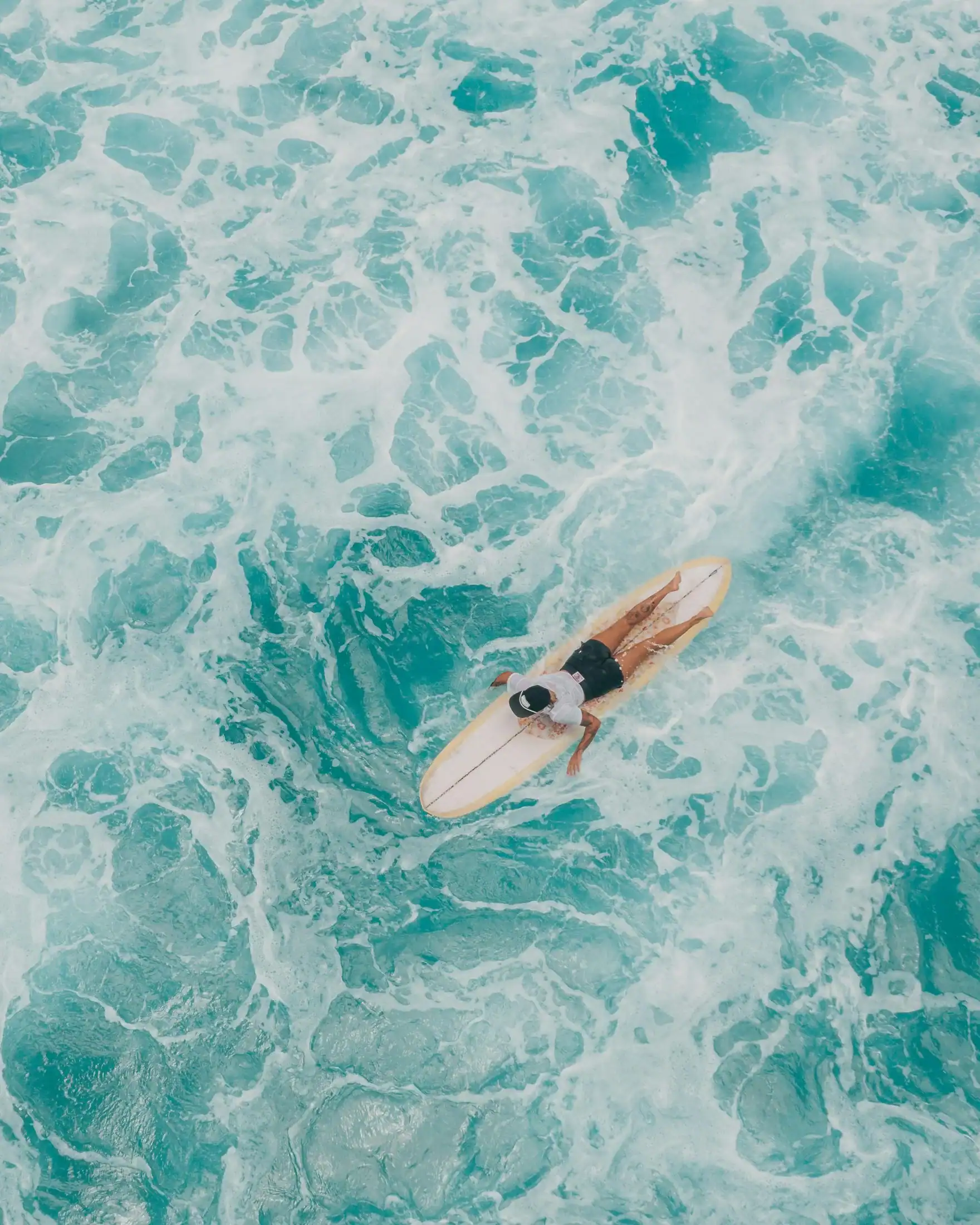
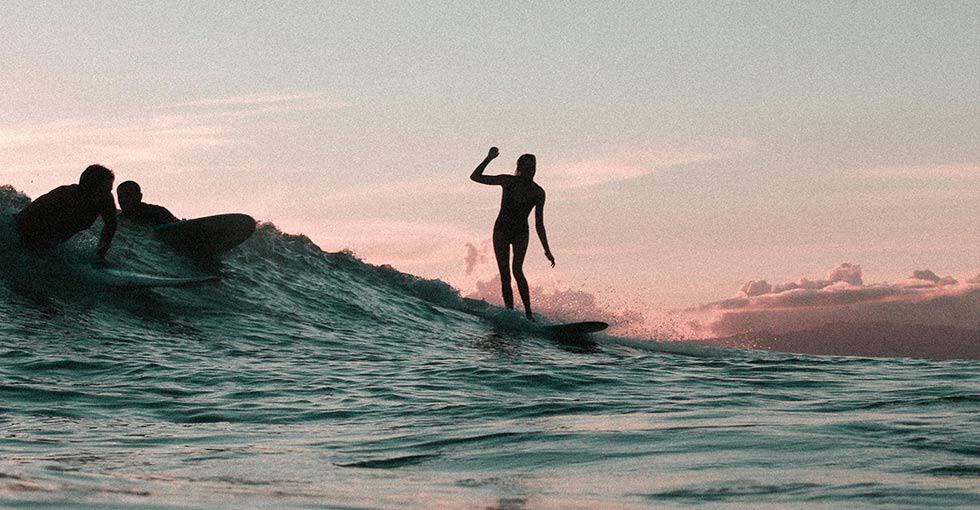
Surfing is unpowered. You paddle out under your own steam, wait for a wave, and use the energy of that wave to move. Everything about it is dictated by the ocean: whether you surf today, where you sit, which wave is yours. That dependence is the frustration and, for most people who stay with it, the entire point.
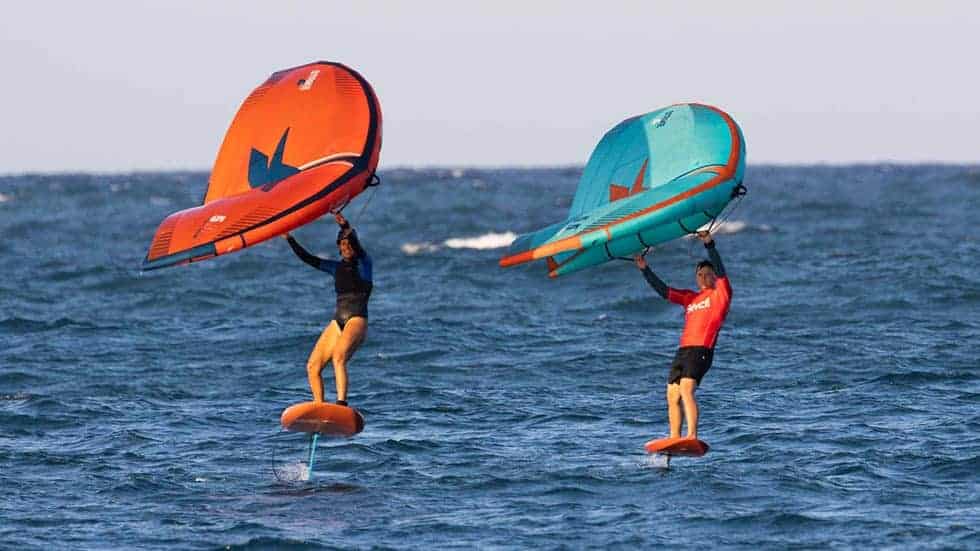
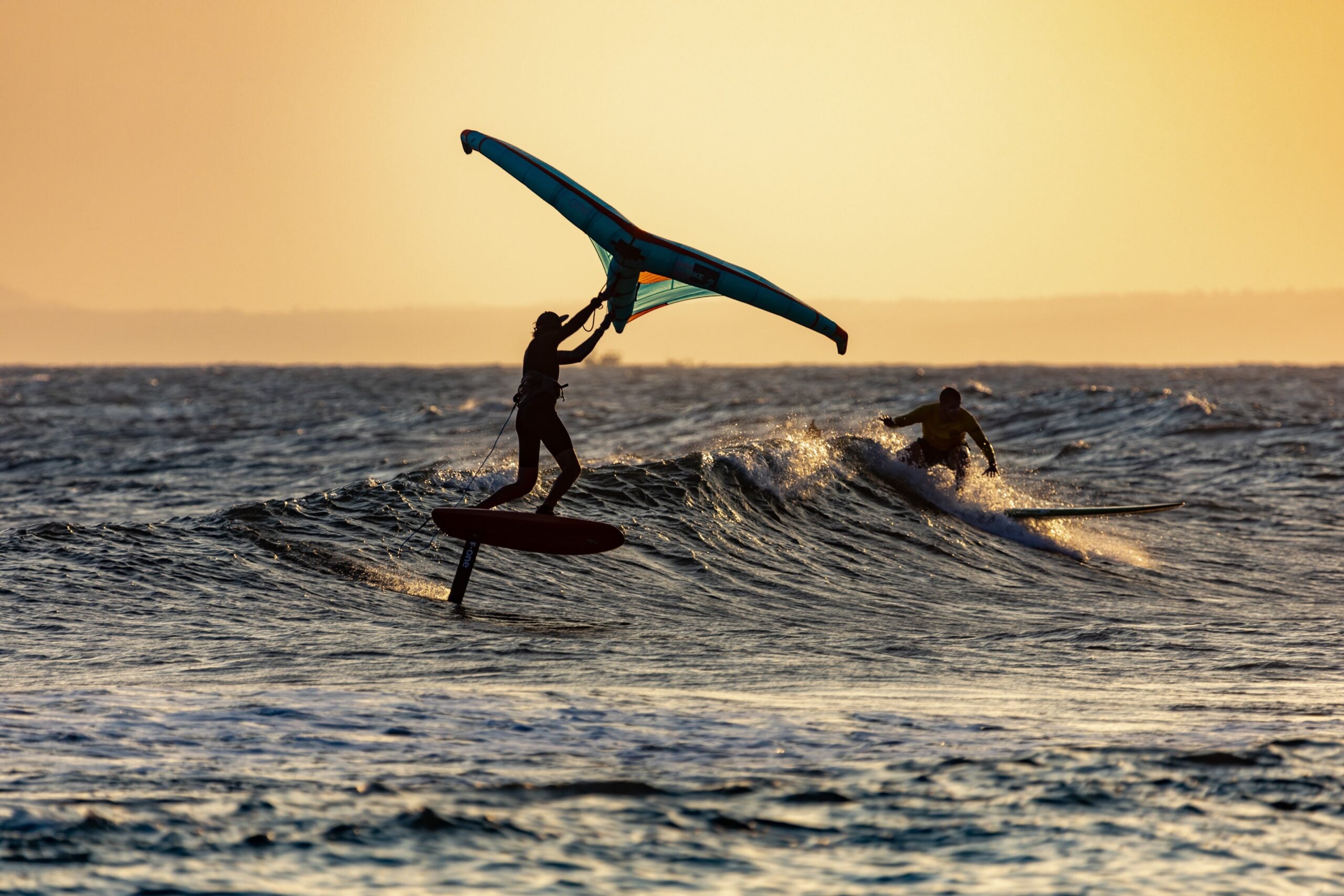
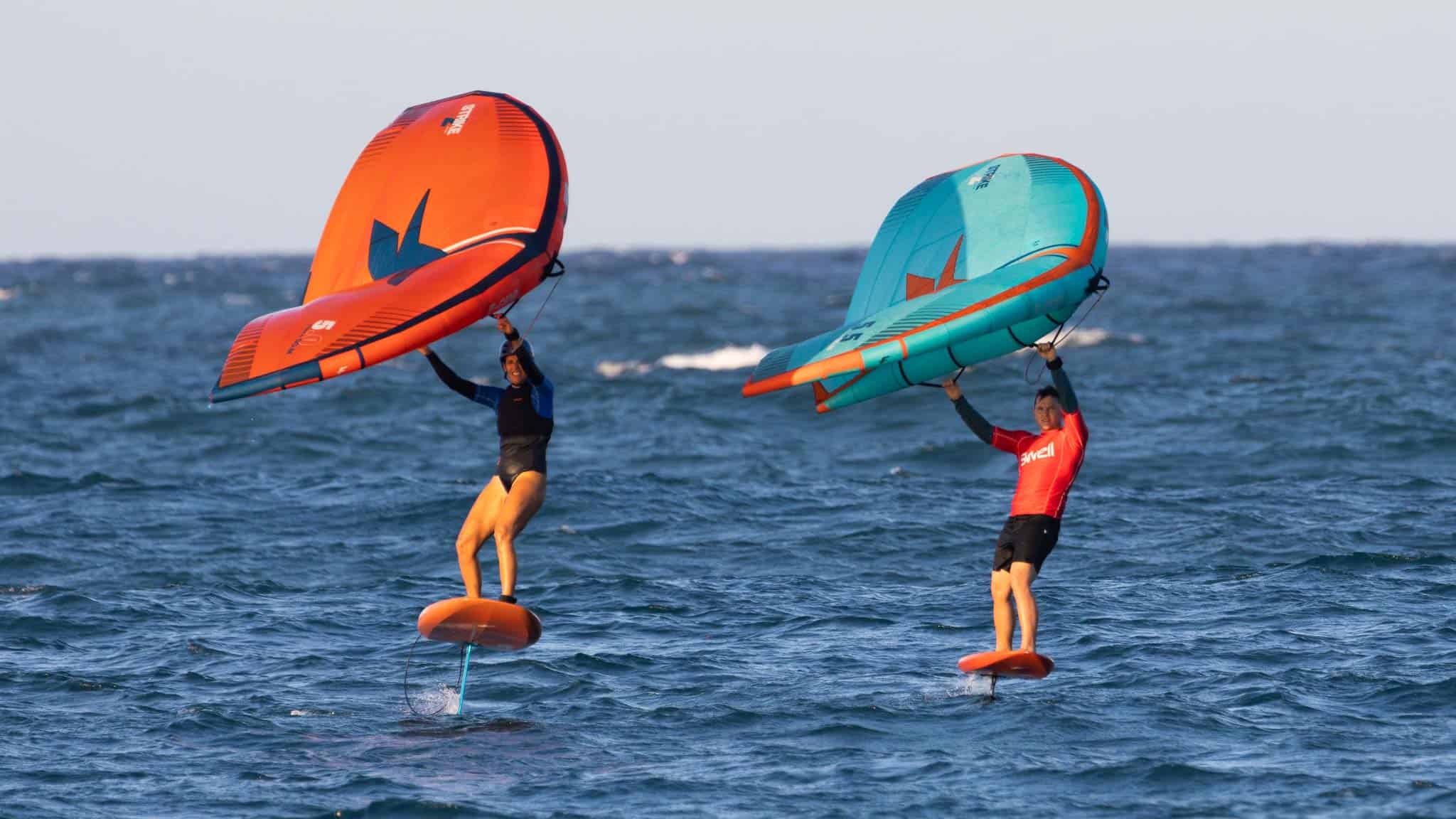
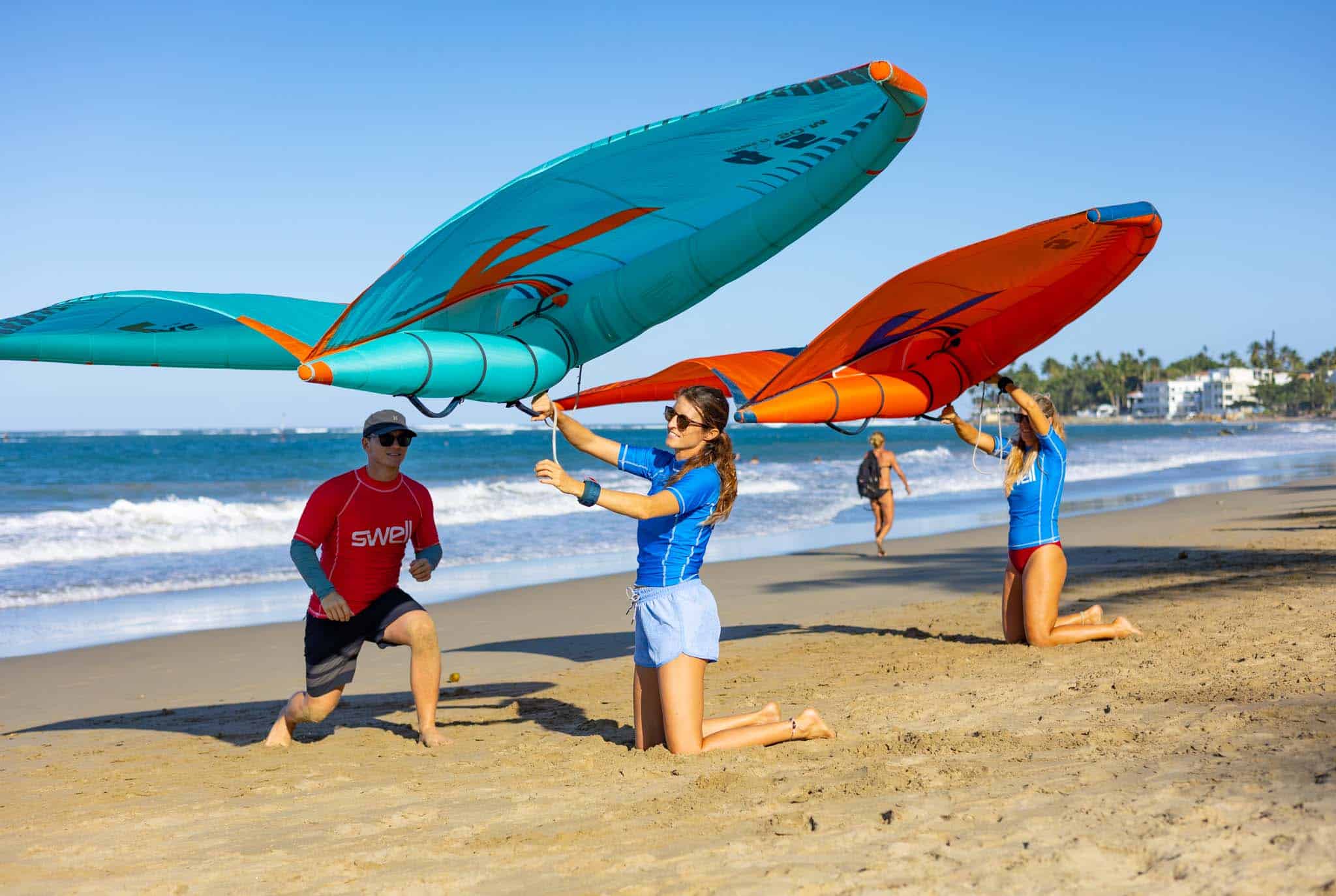
Wingfoiling is powered. You hold an inflatable wing in your hands, roughly the size of a small parachute and weighing a few pounds, and stand on a board with a hydrofoil bolted underneath. Get enough speed and the foil generates lift, the board leaves the water, and the drag simply disappears. It is silent and it is genuinely strange the first time. Because the power comes from wind rather than swell, you can do it on a lake in the middle of a country with no coastline — one of the biggest reasons it has spread as quickly as it has.
Wingfoiling is also very new. It barely existed a decade ago, and the equipment side of the sport is now growing at roughly 10% a year and heading toward a billion dollars by the early 2030s. Surfing, by contrast, has had sixty years to sort itself out. That matters in ways we come back to below.
The learning curve, honestly compared
Wingfoiling front-loads the reward and surfing back-loads it. In a week of coaching, most wingfoil beginners get a real flight; most surf beginners get to their feet in whitewater. But at the one-year mark the picture inverts: the wingfoiler has usually plateaued into fine-tuning, while the surfer is still unlocking something new every session.
Illustrative, based on what we observe across our own beginner groups. Individuals vary enormously.
The reason for the shape of those curves is worth understanding. Wingfoiling splits into two separate skills that you learn one after the other: handling the wing, which most people find surprisingly intuitive within an hour or two, and controlling the foil, which is unlike anything else and translates from no other sport. Once the foil clicks, it stays clicked. We allow eight hours of private coaching for exactly this reason, and most guests are up and flying inside a week, with a few catching their first flights on day two.
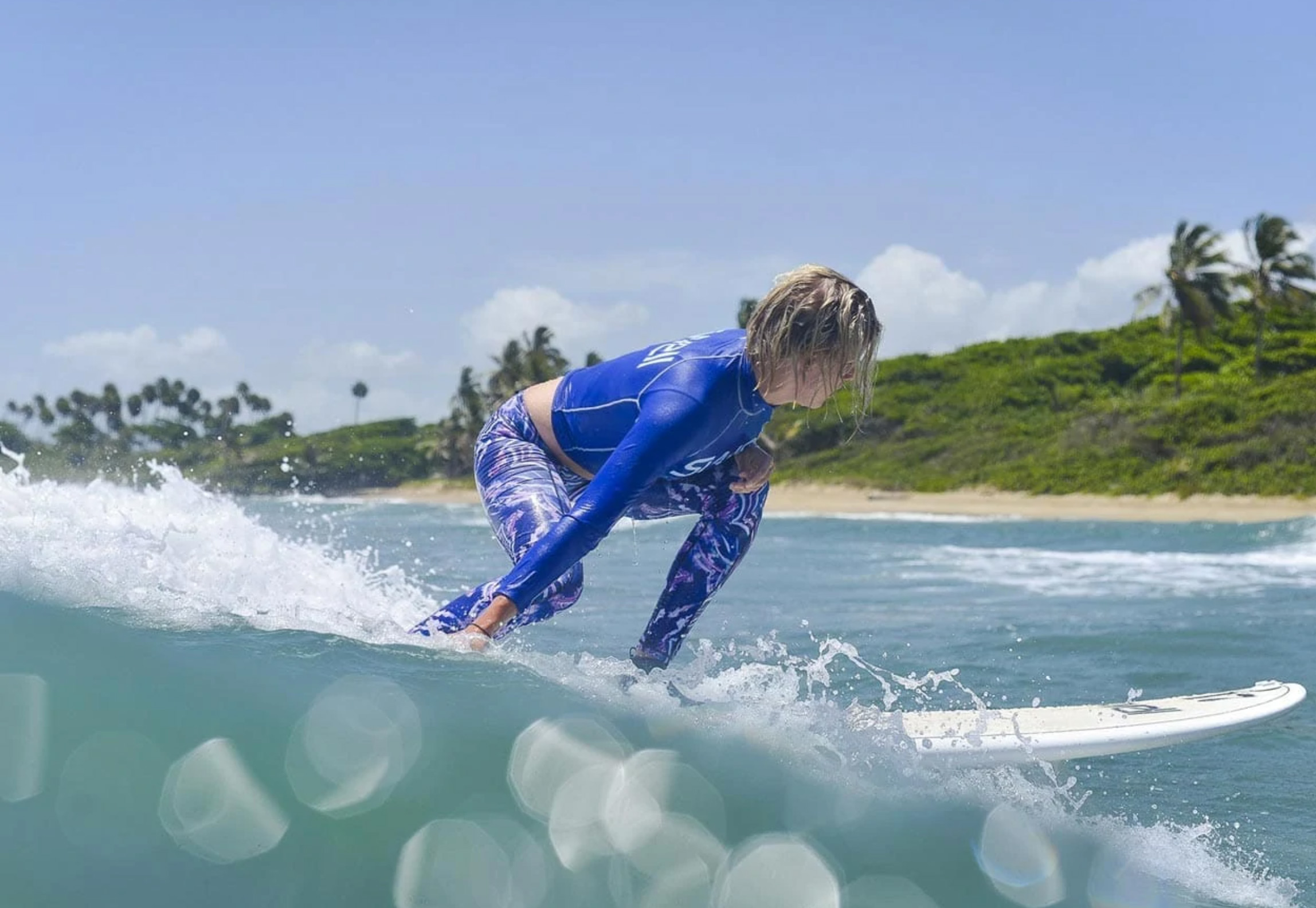
Surfing has no such moment. Standing up on a foam board in whitewater happens quickly — we have taught more than 10,000 people since 2009, and the majority are riding to the beach on their feet by day three. But standing up is not surfing. Reading a wave, positioning yourself, paddling into an unbroken face, turning: that is a project measured in years. Nobody finishes surfing.
Reading about it is one thing. Doing it is another.
Surf coaching, wingfoiling, or simply the stay itself — pick a doorway and we’ll take care of the rest.
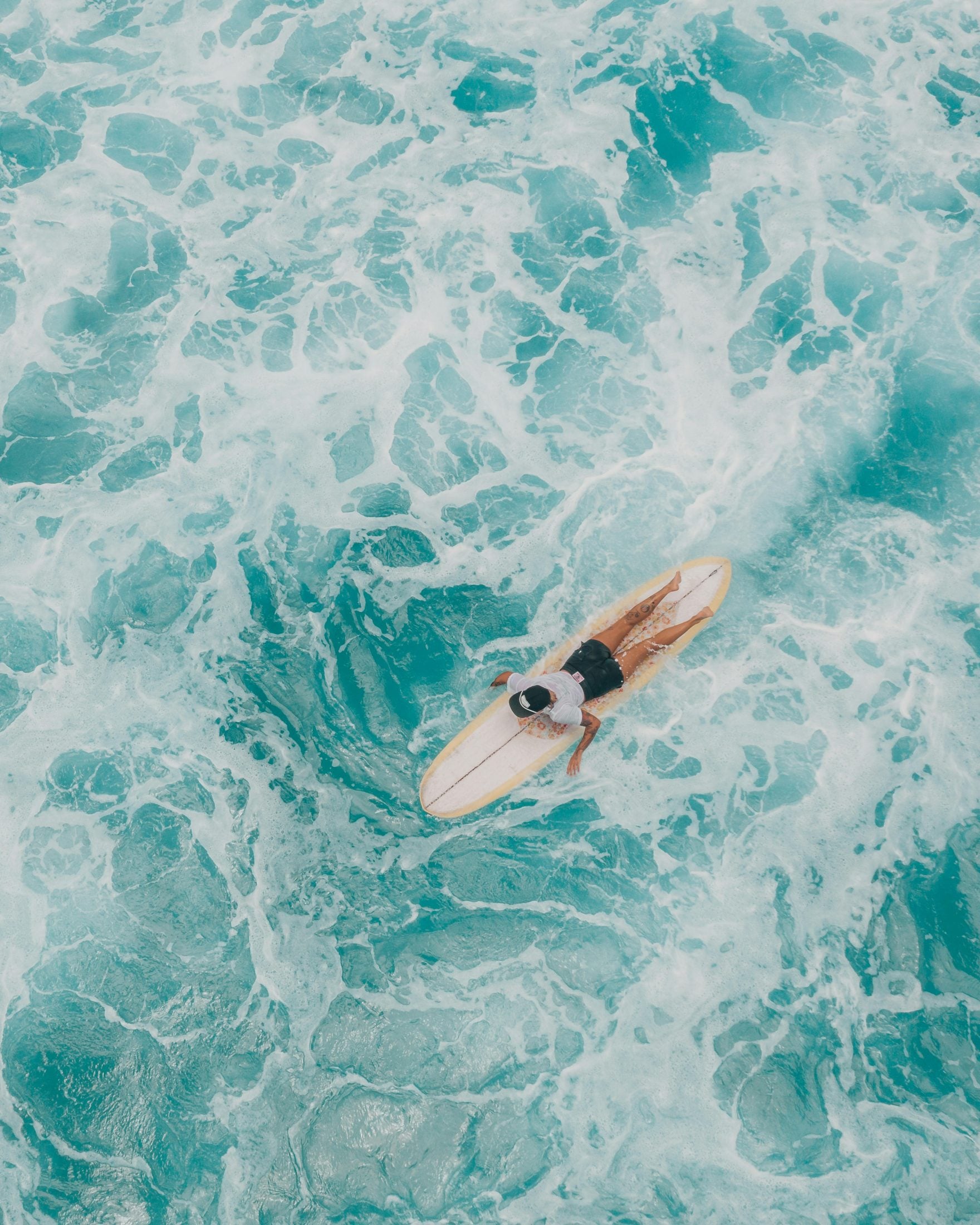
Progress your surfing
Small groups, patient coaches, and boards for every level.
Explore surfing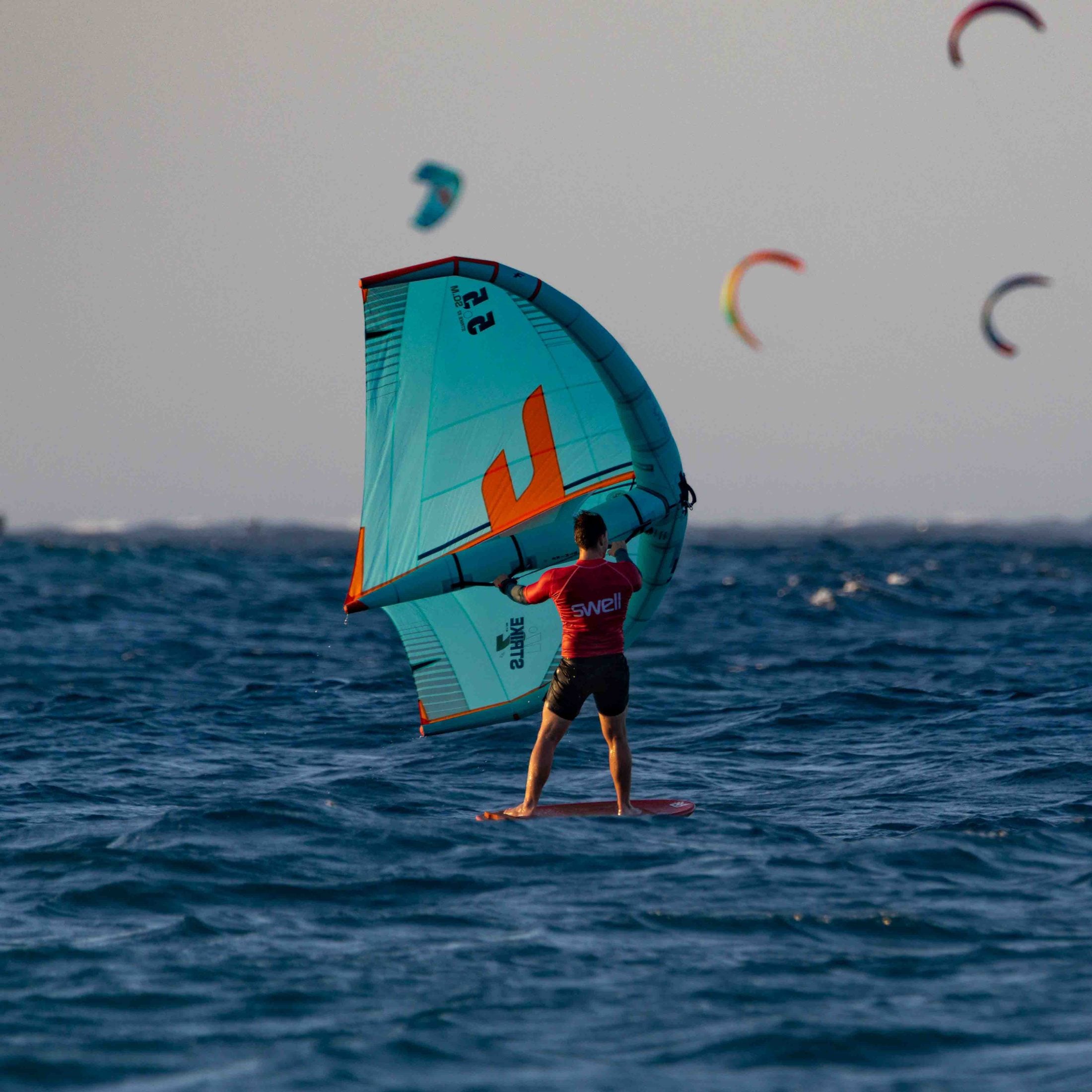
Take up wingfoiling
A new & easy to learn sport — we’ll get you flying.
Explore wingfoilingYour 'home' base
Ensuite rooms • social vibes • tasty food & large community hub.
See the retreat

One thing beginners consistently underestimate about surfing: the hard part is the paddling, not the standing. Most people run out of shoulders before they run out of nerve. Wingfoiling has almost none of it, which is why it can suit people who worry about their fitness.
What each one really costs
Surfing is roughly five to ten times cheaper to enter. A used soft-top and a leash puts you in the water for a few hundred dollars, and that board will still be usable in ten years. A complete beginner wingfoil package — wing, board, foil, pump, impact vest, helmet — realistically starts around $2,500 and climbs quickly from there.
| Cost | Surfing | Wingfoiling |
|---|---|---|
| Entry kit | $300–600 | $2,500–3,500 |
| Second-hand market | Deep and cheap | Thin, prices hold high |
| How long kit lasts | Years — a good board is a good board | Gear moves fast; three-year-old foils feel dated |
| Adding a second setup | $400–900 per board | $700–1,400 per wing or foil |
| Flying with it | $100–200 each way, if accepted | Two checked bags, usually fine |
| Ongoing | Wax, leashes, ding repair | Foil maintenance, wing repairs, upgrades |
There is a quieter cost to wingfoiling that nobody advertises. The sport is young enough that designs are still improving noticeably year on year, so gear depreciates faster than in surfing, where a well-shaped longboard from 2015 is still a well-shaped longboard. If you are cost-sensitive, that is a real factor.
The obvious counter is that you do not need to buy anything to find out whether you like either sport. On our wingfoil weeks a full quiver of wings, boards and foils is included and sized to you and the day’s wind, which is a considerably better way to learn than committing three thousand dollars to a guess.
Pros and cons of each
Both sports are genuinely worth doing. Here is the balanced version, including the parts we would rather not mention.
Surfing
- Cheap to start and cheap to continue
- Gear holds its value and lasts
- No wind needed — glassy mornings are the best ones
- Depth: you will never run out of things to improve
- Enormous global community and culture
- You can learn on any coastline with waves
- Slow progress after the first week; plateaus are normal
- Physically demanding — paddling fitness takes time
- Crowded line-ups and, at some breaks, real localism
- Entirely dependent on swell; flat weeks happen
- Boards are a nuisance to travel with
- Etiquette is unwritten and unforgiving
Wingfoiling
- Fast, dramatic results — flight within a week is normal
- Works on lakes, rivers and bays, not just coastline
- Light on the body; very little paddling
- Gear packs down small and travels well
- Safe by design — the wing depowers the instant you let go
- Uncrowded, and the community is welcoming
- Works in light wind, from around 10–12 knots
- Expensive to buy into
- The foil is sharp and demands respect and a helmet
- No wind, no session
- Gear dates faster than surf equipment
- Deep water needed — you cannot practice ankle-deep
- Fewer schools, so good instruction is harder to find
Conditions decide this more than you do
Pick the sport your local water can actually support. If you live somewhere with reliable wind and no swell, wingfoiling is the obvious answer. If you have swell and fickle wind, surf. Most people who choose the sport that does not match their conditions quietly stop within a year.
This is the single most common mistake we see. Someone falls for the look of foiling, buys a package, and then discovers their nearest usable wind window is eleven days a month. The independent sailing charity UKSA makes a similar point about accessibility across the wind sports: the barrier is rarely skill, it is whether your conditions let you practice often enough to progress.
Cabarete is unusual in offering both properly, which is why we ended up here rather than somewhere with better waves or better wind alone. The north coast of the Dominican Republic gets an offshore morning breeze that grooms the surf, then reliable side-shore trade winds that fill in after midday. Locally that means somewhere between 250 and 300 days of usable wind a year, and around 350 surfable days at our home break. Water sits at 27°C (81°F) year-round, so no wetsuit, in either sport.
Can you learn both in one week?
Yes, and it works better than it sounds, because the two sports use different parts of the day. Surf happens at dawn while the water is glassy and the wind has not arrived. Wingfoiling happens in the afternoon when the trades are up. They do not compete for the same hours.
The honest caveat: splitting your week does slow each individual sport down. If your only goal is to fly on a foil by Friday, spend the whole week on the wing. If your only goal is to paddle into a green wave, spend the whole week surfing. Doing both means you will finish with a solid start in each rather than a finished skill in one — which for most people on a once-a-year trip is the better outcome, because it also tells you which of the two you actually want to pursue at home.
It is also physically manageable for most reasonably active adults, precisely because the demands are so different. Surfing is shoulders and cardio. Wingfoiling is legs, core and concentration. They fatigue different things.
Which one should you learn? Score yourself
Five questions. Count your A and B answers, then read the result underneath.
The five-question version
Age, fitness and starting from nothing
Neither sport has a meaningful upper age limit, and neither requires strength. Wingfoiling in particular is far gentler than it looks: the wing is light in the hand, it depowers the moment you let go, and there is very little paddling involved.
The average age of a guest at Swell is 39, and a good number are well past that. We teach kids from around eight on the wing, and we have taught plenty of people in their sixties. What matters far more than age is decent balance and a willingness to look silly for two days. If the age question is the thing holding you back, we wrote about it properly in learning to wingfoil at 40, 50 or 60.
You also do not need one sport to do the other. Wingfoiling is the gentlest route onto a foil that exists, and plenty of our guests arrive with no board sports at all — if anything a blank slate helps, because there are no habits to unlearn. If you want the detail on what a first week on the wing involves, our beginner’s guide to wingfoiling walks through it step by step.
The verdict
Three straight recommendations, no hedging.
Learn to surf if you live near waves, want the cheapest way in, and are genuinely drawn to the ocean rather than to speed. Accept that year one is humbling. Our surf coaching program is built around exactly this: two sessions a day, coaching capped at five people, gentle waves, no pressure to level up before you are ready.
Learn to wingfoil if you have wind more often than swell, want a fast and spectacular result, or want something low-impact on the shoulders. It is the more forgiving sport for adults starting from zero, and the sensation once the foil lifts is genuinely unlike anything else.
Learn both if you have a week and no idea which one is yours. The day splits neatly, the demands are different enough that you can handle it, and you will come home knowing which one to pursue — which is worth more than a few extra hours in either.
Frequently asked questions
Is wingfoiling easier to learn than surfing?
To a point, yes. Most beginners get their first foil flights within a week of coaching, whereas most surfers take months or years to ride unbroken waves confidently. But standing up on a surfboard in whitewater is faster than either, usually by day two or three. Wingfoiling is quicker to reach something impressive; surfing is quicker to reach something.
Do I need to surf before I learn to wingfoil?
No. Wingfoiling is the most accessible entry point to foiling there is, and plenty of people learn it having never stood on any board. Surfing experience helps slightly with balance, but wing handling and foil control are separate skills that no other sport really prepares you for.
How much wind do you need to wingfoil?
Around 10 to 12 knots is enough for a beginner on a large board and a big wing, which is far less than kitesurfing or windsurfing typically require. Most riders find 15 to 20 knots the comfortable sweet spot. Steady, side-shore wind matters much more than strong wind — gusty conditions can multiply the time it takes to learn.
Is wingfoiling dangerous?
Less than it looks. The wing is hand-held and depowers instantly when you let go, unlike a kite, which stays powered and attached. The foil is the real hazard: it is sharp, and it should be treated with respect, which is why helmets, impact vests and a proper self-rescue briefing are standard before anyone leaves the beach.
Can I learn to surf and wingfoil in the same week?
Yes, and the day divides naturally — surf in the glassy early morning, wingfoil in the afternoon trade winds. The trade-off is that progress in each is slower than if you committed the whole week to one. For a first trip, most people find that a fair exchange, because they leave knowing which sport they want to pursue.