TL;DR: Yes, you can learn to wingfoil in your 40s or 50s. Age is not the barrier most people fear. With good coaching and steady wind, complete beginners usually ride the board within a few days and reach their first foil flights inside a week. Technique and conditions matter far more than youth or strength. A focused retreat is the fastest, safest way to start.
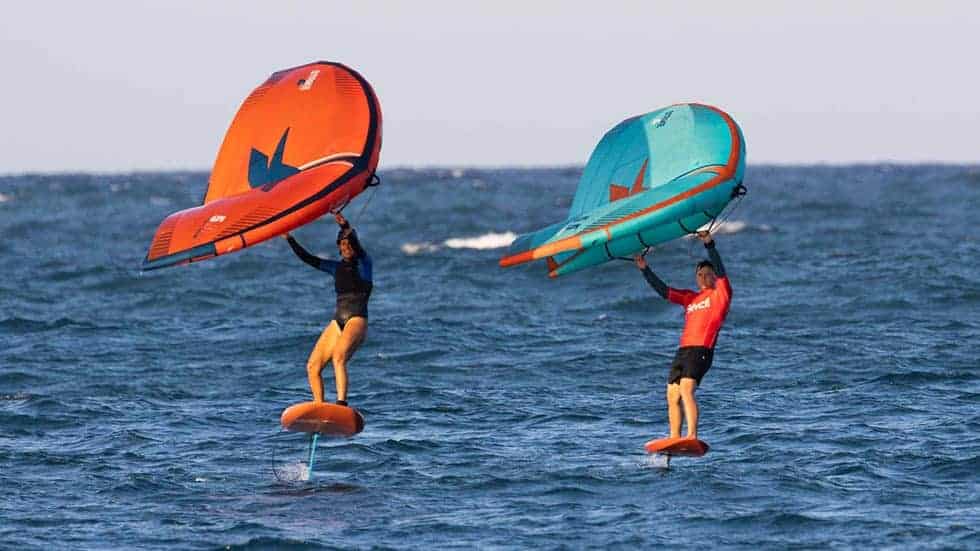
You have watched the clips. Riders gliding silently above the water, held up by nothing but a handheld wing and a hydrofoil. It looks like flying. Then a quieter thought arrives: I would love to learn to wingfoil, but I am probably too old to start.
We hear this every season. Most people who ask are in their 40s or 50s. They have busy jobs, limited holiday time, and often no board-sport background at all. They assume wingfoiling belongs to twenty-somethings with endless free afternoons.
It doesn’t. Age is rarely the thing that holds people back. The real barriers are the wrong conditions, no coaching, and trying to learn an hour at a time on cold, choppy water.
Your realistic timeline
From first wing to first flight
- 1Day 1Wing handling on land, then your first rides lying and kneeling on a big, stable board.
- 2Sessions 2–3On your feet and riding the board flat across the water.
- 3Sessions 3–10The breakthrough — your first short foil flights above the surface.
- 4About 1 weekLinking flights and riding with growing confidence.
Steady, back-to-back days speed this up. A solo lesson every few weeks slows it down.
This guide gives you an honest answer to the two questions that matter most. Are you too old? And how long will it actually take? We will keep it realistic, with no hype and no promises of instant flight, so you can decide whether a week on the water is worth it for you.
Are you ever too old to learn to wingfoil?
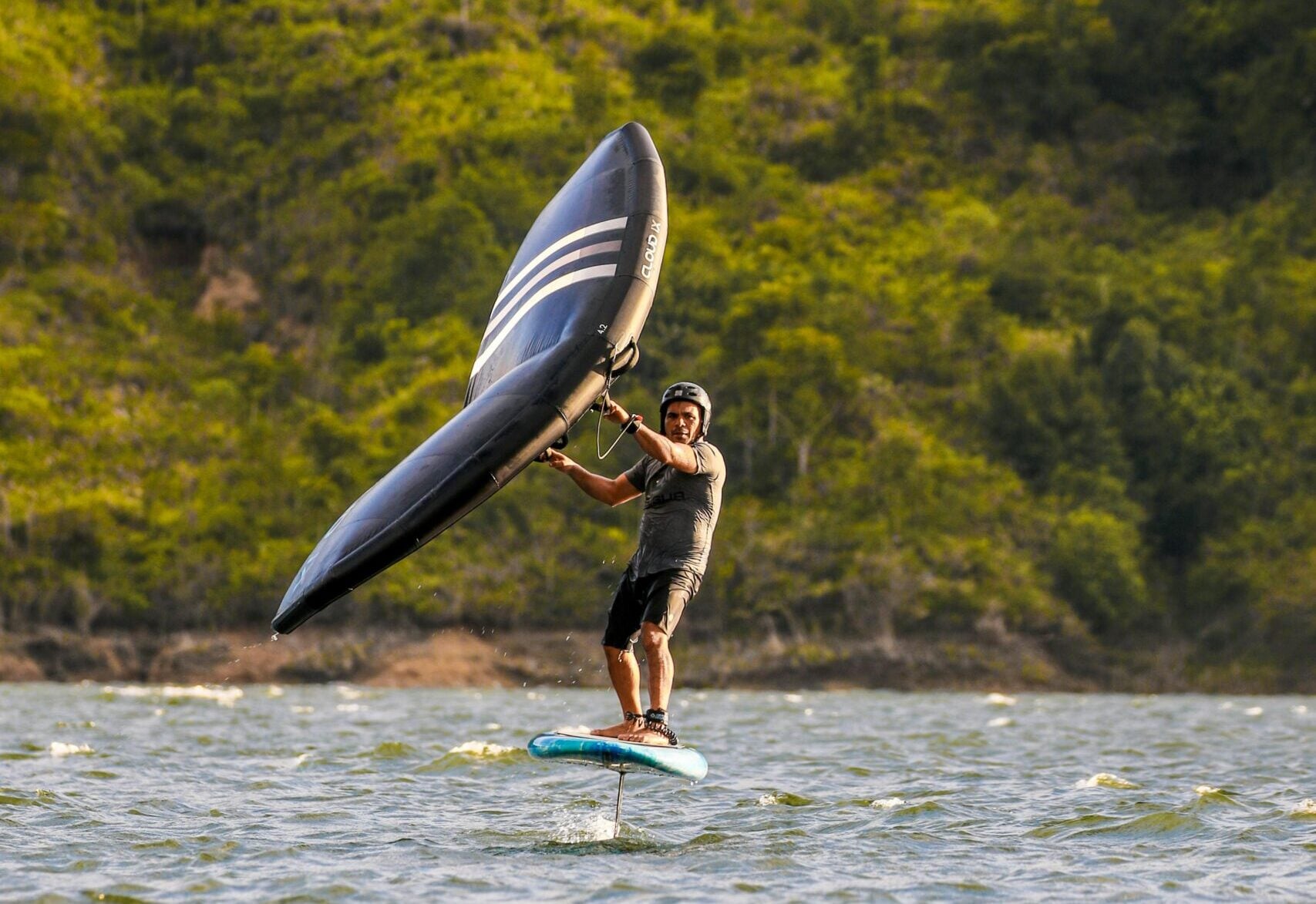
No. There is no age limit on learning to wingfoil. Instructors teach beginners in their 40s, 50s and 60s every season, and some schools specialise in older starters. What matters is reasonable mobility and balance, not youth. Wingfoiling rewards patience and good technique far more than raw athleticism.
The idea that watersports are only for the young is a myth. Guides written specifically for older beginners point out that you can start wingfoiling well into your 60s, as long as you build up sensibly and pick calm conditions.
It helps to know who actually turns up to learn. At Swell, the average age of our guests is 39, and plenty are in their 50s. Nobody is the odd one out. The same is true for learning to surf after 40 — the ocean does not check your ID.
One sensible step: if you are returning to exercise after a long break, a quick word with your doctor before you travel is never a bad idea. Beyond that, come as you are.
How long does it really take to learn to wingfoil?
Most complete beginners ride the board across the water within their first two or three sessions, and reach their first short foil flights somewhere between sessions three and ten. With no board-sport background, plan for roughly six to ten sessions to feel comfortable flying. Steady daily practice speeds this up dramatically.
The numbers are consistent across schools. Instructors report the sport starting to click around the third to sixth session, and many schools quote a three to five lesson window to stand up and start gliding. Beginners with a surf, windsurf or kite background often progress faster.
The honest caveat: riding the board flat comes quickly, but getting up on the foil takes a little longer. That is where a run of consecutive days pays off. Most guides suggest booking at least a week in a spot with constant wind to reach your first proper flights.
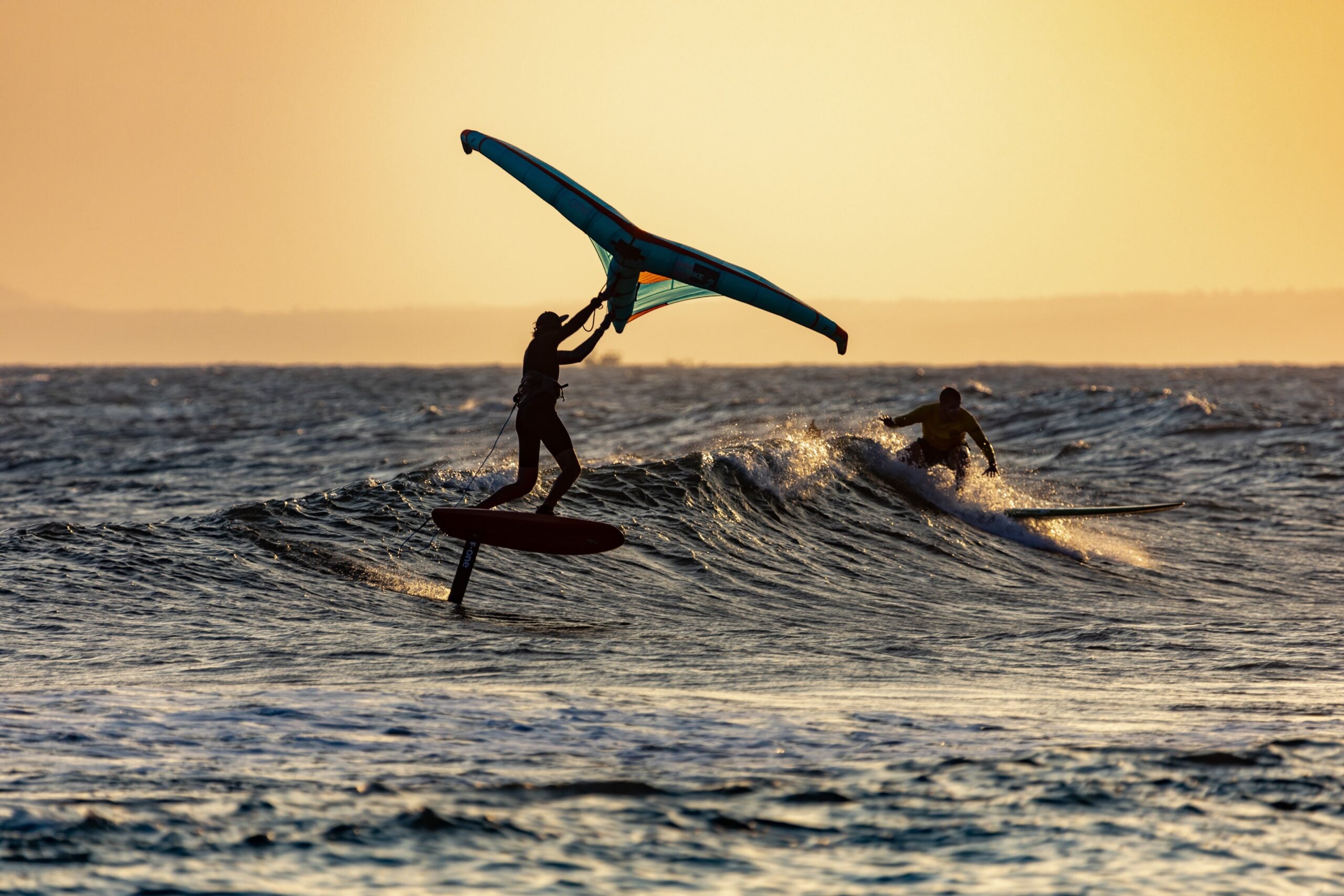
Your first day on the water
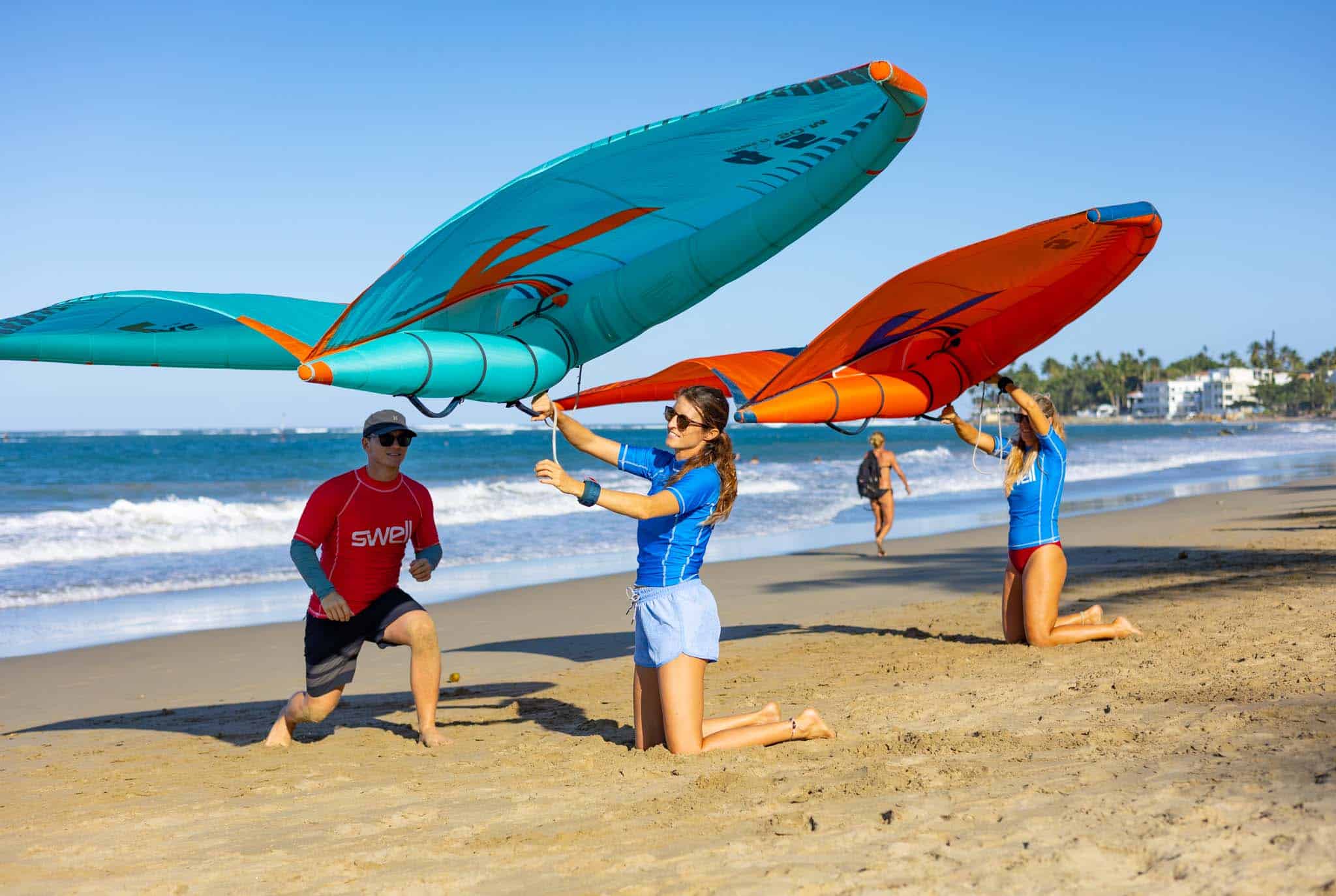
Day one is mostly about the wing, not the foil. You spend time on land learning how to hold the wing, how to flip it, and how to feel the difference between power and neutral. It takes 30 to 60 minutes and it is worth every second.
Then you get on a big, stable board, usually with the foil kept low or off at first, and practise riding flat across the water. Most people manage this within their first few sessions.
Getting up on the foil
This is the magic moment, and also the one that tests your patience. Many learners feel a little stuck around sessions three to five, standing and riding but not yet flying. Then it clicks. As progression guides put it, the frustration right before the breakthrough is normal — push through it and the foil lifts.

Why wingfoiling is easier on an older body than it looks
From the beach, wingfoiling looks athletic and intimidating. Up close, it is gentler than most people expect, which is exactly why it suits beginners who are past their twenties.
A few things work in your favour:
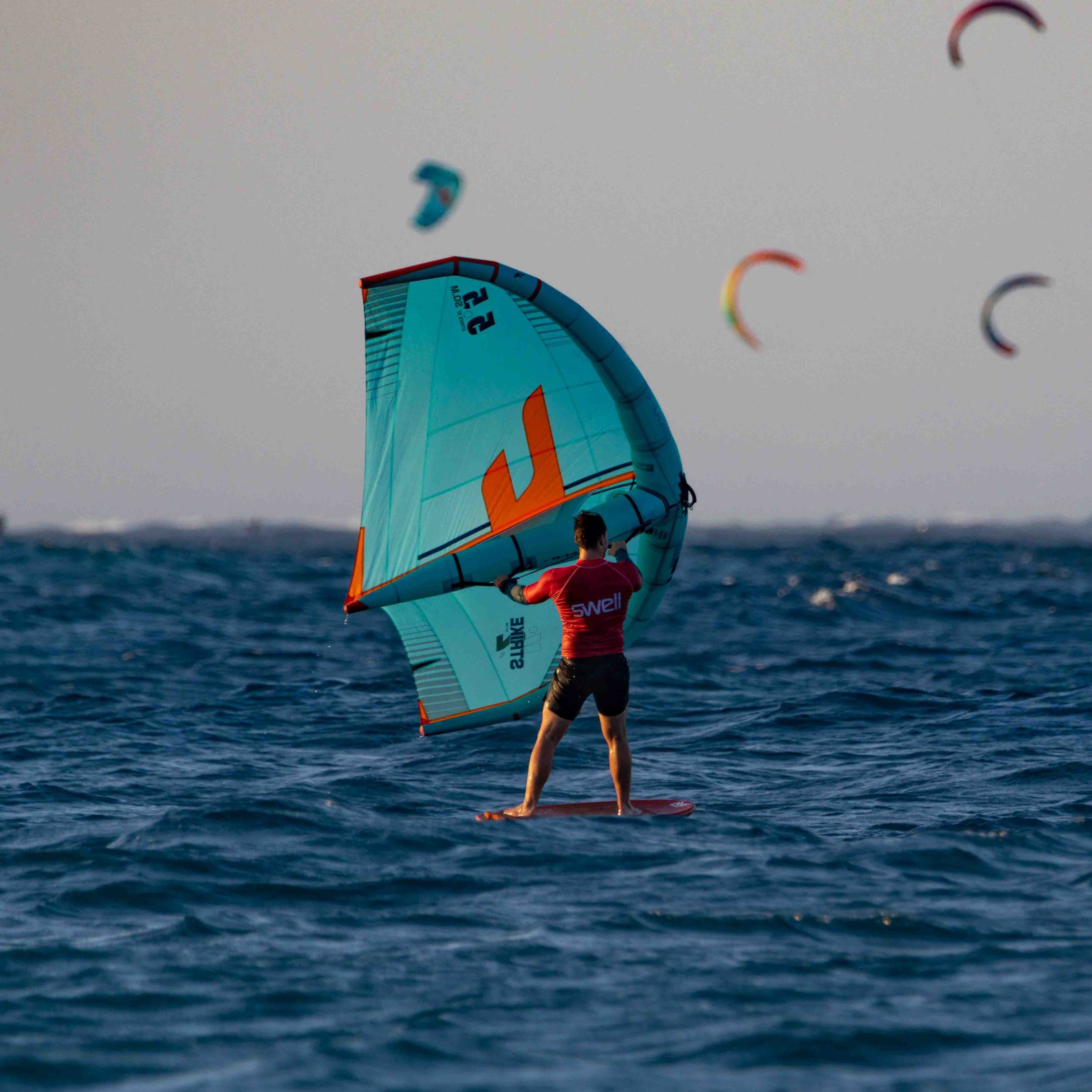
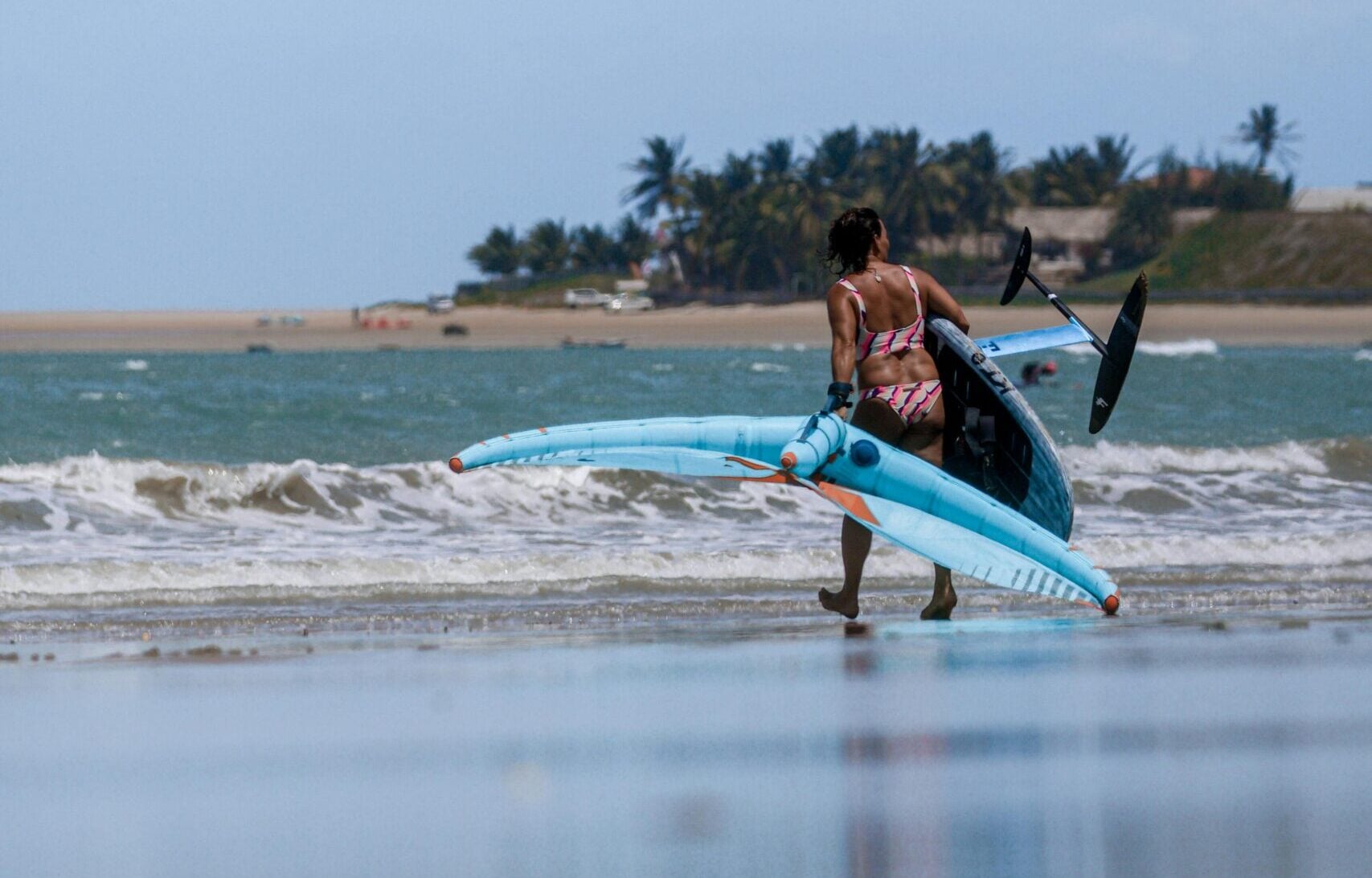
- No harness, no lines. Unlike kitesurfing, you simply hold the wing in your hands. If you let go, it drifts harmlessly. There is no lofting, no tangled lines, and far less that can go wrong.
- It is a balance sport, not an arm sport. Coaches stress that the wind does the pulling, and that technique can account for around half your progression. You do not muscle your way up. You find balance and let the gear work.
- You start low and stable. Beginners learn on a large, high-volume board that floats you comfortably, often starting from a kneeling position before standing.
- It is low impact. Falls happen in flat water, not onto hard ground. Warm water makes them almost pleasant.
Strength helps a little, but flexibility, patience and calm feet help far more. If you can walk a few miles and get up off the floor without much trouble, you have the base you need.
What actually determines how fast you learn
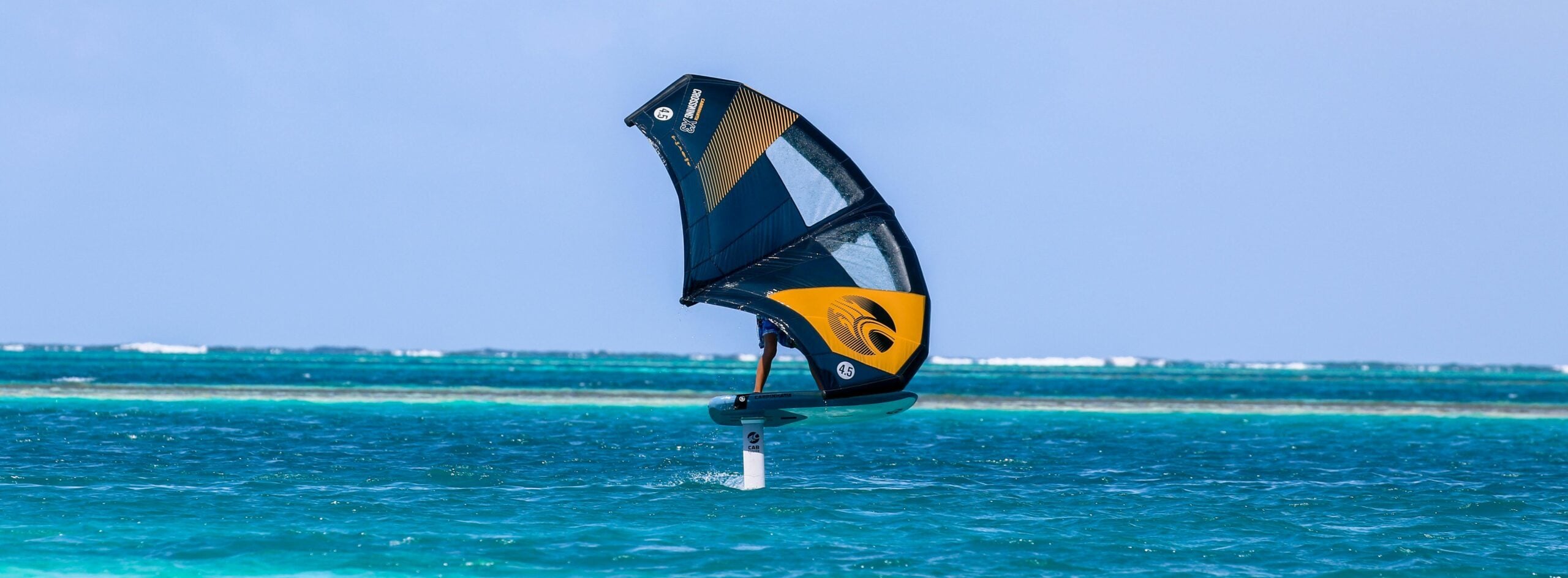
Three things decide your progress, and none of them is age: conditions, coaching, and consistency. Flat water with steady, moderate wind makes everything easier. A good instructor saves you weeks of bad habits. And frequent sessions on consecutive days beat the occasional weekend by a wide margin.
On conditions, most schools point beginners toward the same window:
- Steady wind of roughly 12 to 18 knots
- Flat, protected water rather than breaking waves
- Cross-shore wind, so you are never blown out to sea
- Warm water, so cold and fatigue don’t cut your day short
On coaching, the difference is enormous. Good instruction in the right spot can compress a months-long learning curve into a few weeks. A coach also spots the small errors you cannot feel yourself, which is where most beginners lose time.
On consistency, the pattern is clear: two focused sessions close together will move you further than one long session a month apart. Your body remembers what it learned yesterday. This single fact is the strongest argument for learning on holiday rather than at home.
Why a focused wingfoil retreat beats one lesson at a time
Here is the trap with learning at home. You book a lesson, make progress, then wait two weeks for the next window of wind and free time. By the time you are back on the water, half of what you learned has faded and you start again.
A retreat removes that friction. Several days in a row, in a spot chosen for reliable wind, with a coach and all the gear provided. Your muscle memory builds instead of resetting. This is why beginners who arrive with zero experience so often leave with their first foil flights inside a week.
There is one more advantage that matters more as you get older: pacing. A good camp does not push you to exhaustion. Two to three focused hours of coaching a day is plenty when you are learning, and it leaves energy for your body to absorb new movement patterns. Coaches who work with over-40s stress rest and gentle recovery between sessions, and a little stretching or yoga at the end of the day keeps you fresh for tomorrow.
It is also kinder to your wallet at the start. A full beginner kit — board, foil, wing and wetsuit — runs into several thousand dollars. Learning at a camp lets you fly on quality gear first and confirm you love the sport before you buy anything.
If you are still weighing wingfoiling against other watersports, it is worth reading how wingfoiling compares to surfing and kitesurfing before you choose. Many of our guests land on wingfoiling precisely because it is the quickest of the three to feel that flying sensation.
Which is quickest to learn?
| Wingfoil | Surfing | Kitesurfing | |
|---|---|---|---|
| First taste of success | A few days to glide | A week+ to ride green waves | Several days to ride |
| Learning curve | Gentle start, foil takes a week | Steady; reading waves takes time | Steeper; kite control comes first |
| Gear to manage | A handheld wing, no lines | Just a board | Kite, lines, bar and harness |
| What it asks of you | Balance over strength | Paddling fitness | Wind awareness and coordination |
| Best if you want… | The quickest flying feeling | Classic wave riding | Speed and big air |
Cabarete: steady wind, warm flat water, no wetsuit
Cabarete on the Dominican Republic’s north coast is one of the Caribbean’s most reliable wind spots. Afternoon trade winds blow steadily through much of the year, the water is warm enough to skip a wetsuit, and there is flat, protected water to learn on. For an older beginner, that combination removes a lot of the friction that slows people down.
Wind & water by month
When to wingfoil in Cabarete
Cabarete gets side-onshore wind almost year-round, but it has a rhythm. The bars show typical afternoon wind; the temperature is the water. Use it to pick the trip that matches how you ride.
- Steady — reliable, great for learning
- Strong & consistent — peak season, best for progression
- Quieter — lighter, more variable days
Jan26°C
Feb25°C
Mar25°C
Apr26°C
May27°C
Jun28°C
Jul28°C
Aug29°C
Sep29°C
Oct28°C
Nov27°C
Dec26°C
Typical afternoon wind and average water temperature. Conditions vary year to year — September to November overlap with Caribbean hurricane season, when wind is lightest and least predictable. Book with your riding level in mind.
The rhythm of the bay suits learning too. Mornings are often calm and glassy, which is perfect for early wing handling and board balance. The wind then fills in through the afternoon, giving you the steady breeze you need for foiling. You get two different kinds of practice in a single day.
It is no accident that this stretch of coast has drawn windsurfers, kiters and now wingfoilers for decades. If you want the detail, here is why Cabarete is such a strong wingfoil destination for beginners and improvers alike.
The takeaway: age is not the barrier
Three things to hold on to. First, you are not too old to learn to wingfoil in your 40s or 50s — the water genuinely does not care. Second, a realistic timeline is a few days to ride and about a week of steady practice to fly. Third, what decides your speed is conditions, coaching and consistency, which is exactly what a focused week gives you.
If that sounds like your kind of holiday, take a look at our learn-to-wingfoil packages at Swell and picture yourself on the water. And if you are still not sure whether it is right for you, send us a message with your questions — we would far rather give you an honest answer than a hard sell. You can also check current pricing and dates whenever you are ready.
Frequently asked questions
Is wingfoiling hard to learn for a total beginner?
It is challenging at first but very achievable. Most complete beginners ride the board within a few sessions and reach their first foil flights within about a week of steady practice. The trick is good coaching and calm, flat water rather than natural talent.
Am I too old to learn to wingfoil at 50?
No. Fifty is a perfectly normal age to start, and instructors regularly teach people well into their 60s. Wingfoiling depends on balance and technique more than strength or youth, so reasonable mobility is all you really need.
How many days do I need to learn to wingfoil on holiday?
Plan for about a week. That gives you enough consecutive days to move from wing handling to riding the board and on to your first foil flights. Learning on back-to-back days is far more effective than the occasional lesson at home.
Do I need to be fit or strong to wingfoil?
You do not need to be an athlete. The wind provides the power, so technique and balance carry you, not muscle. A basic level of fitness and flexibility is helpful, and gentle core and leg preparation before you travel makes the first days more comfortable.
Do I need my own equipment to start?
No. A full beginner setup is expensive, so most people learn on gear provided by a school or camp. That lets you try the sport, learn what suits your size and weight, and decide whether to buy your own kit later.