Booking a holiday on your own can feel like a leap. Who will you talk to at dinner? What if everyone else arrives in pairs? Will it just be a bit, well, awkward? If these questions have ever stopped you from clicking “book,” here’s some reassuring news: a surf holiday is one of the easiest and most rewarding ways to travel alone. Surf camps are built around shared experiences, gentle daily rhythms and a naturally friendly crowd — which means solo travel here rarely feels solo at all. Let’s walk through exactly why a single surf holiday works so well, and how to find the camp that’s right for you.
Why a Surf Holiday Is Perfect for Solo Travellers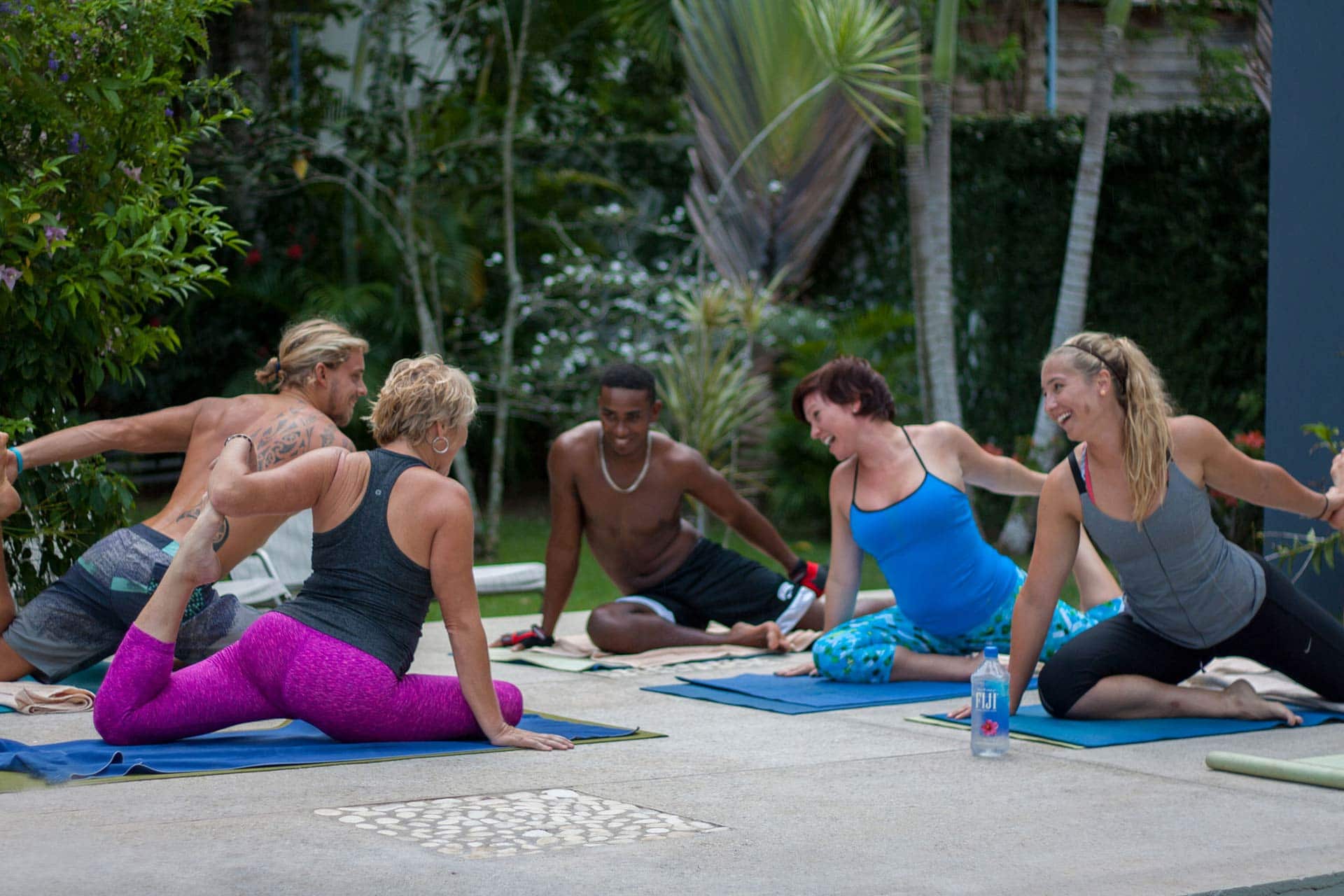
Most types of solo travel ask you to do the heavy lifting socially — you arrive somewhere, and it’s up to you to strike up conversations. A surf camp flips that on its head. The entire experience is structured around a shared rhythm: you surf together, eat together and unwind together. That built-in routine does the connecting for you.
There’s something about learning a sport that levels the playing field, too. When everyone is paddling out, wiping out and laughing about it afterwards, the usual barriers melt away. Nobody cares whether you arrived as a couple, a group or completely on your own — the shared challenge of catching waves bonds people fast. For anyone considering adventure travel solo, surfing offers the perfect mix of physical challenge, daily structure and easy companionship.
That’s why a surf holiday on your own tends to feel effortless rather than intimidating. The activity gives your days purpose, the camp gives you company, and the ocean reminds you why you came in the first place.
You’re Never Really ‘Alone’ at a Surf Camp
The phrase “solo travel” can conjure images of quiet dinners for one and long stretches of your own company. At a surf camp, the reality is the opposite. The surf camp community is one of the defining features of the experience, and it forms almost instantly.
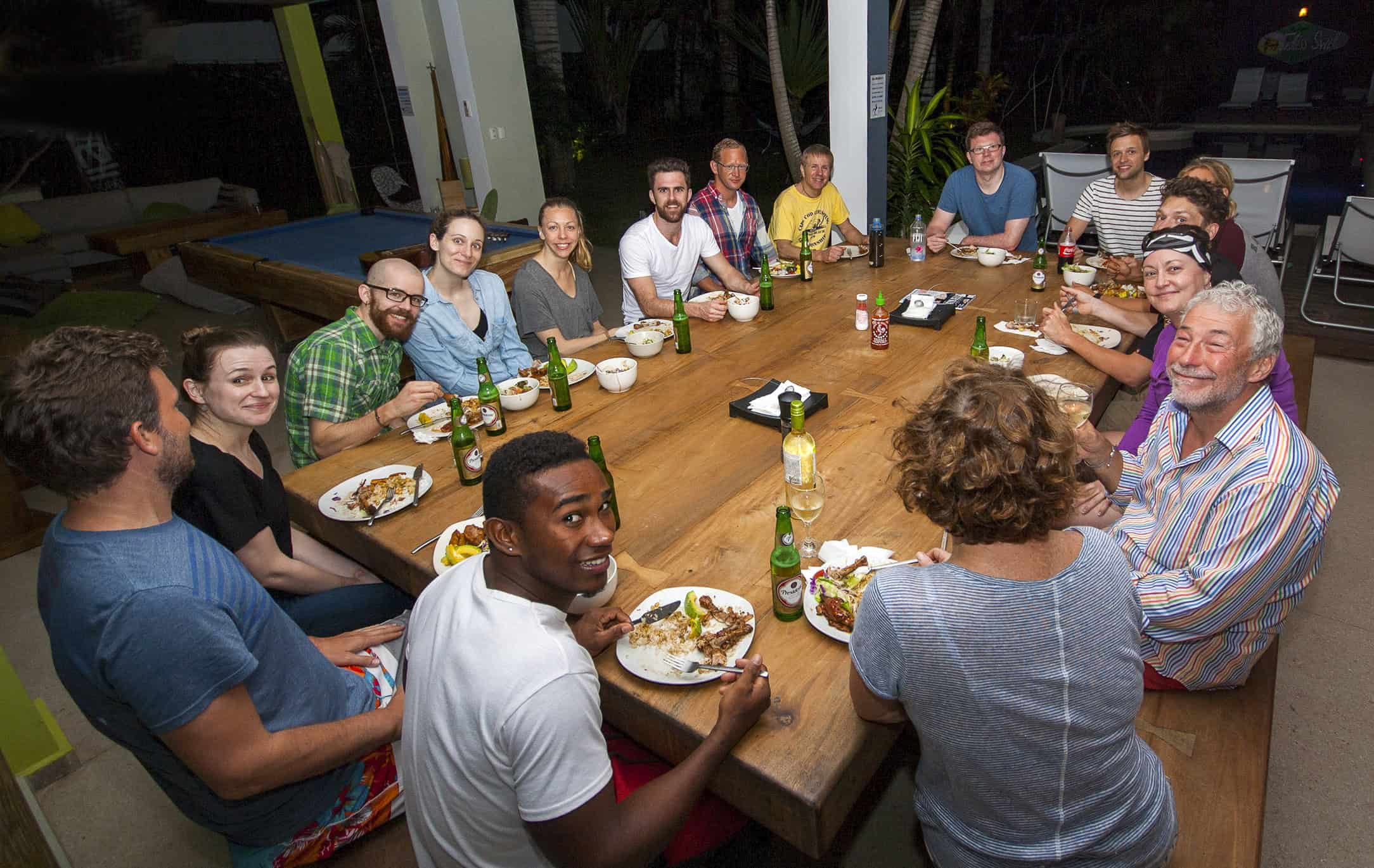
Group surf lessons throw you straight in with other guests who are at a similar stage. You celebrate each other’s first waves and commiserate over the wipeouts — and just like that, you’ve got something to talk about over lunch. Shared meals are another natural connector: long communal tables where conversation flows because everyone’s been through the same morning session.
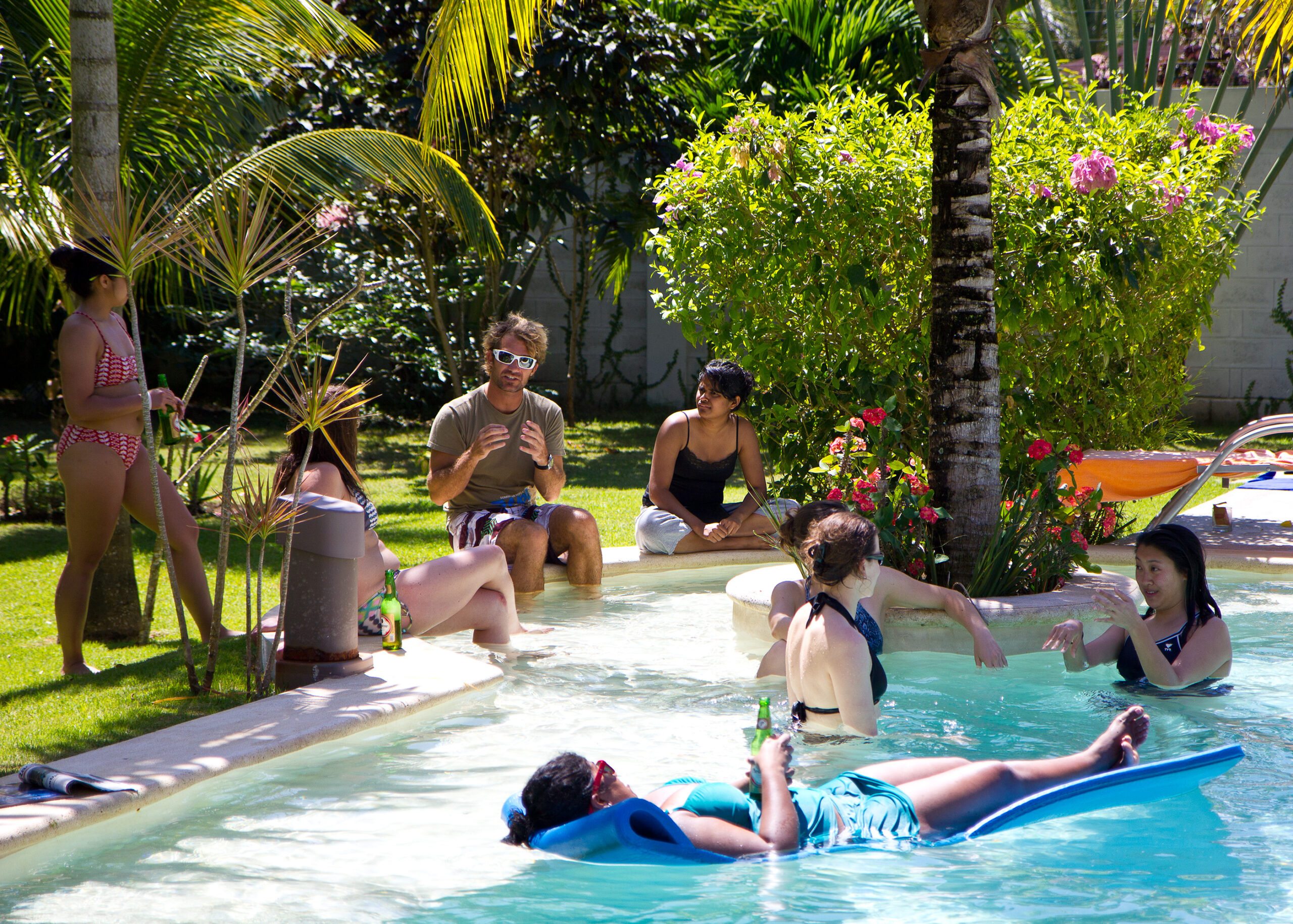
Then there are the social spaces — the pool, the lounge areas, the hammocks where people gather between activities. These spaces are designed to bring people together rather than keep them apart. It’s why so many people who set out to meet people surf camp-style come home with friends from all over the world. You’re surrounded by like-minded travellers who chose the same trip for the same reasons.
Common Worries Solo Surfers Have (and Why They Fade Fast)
Almost everyone arrives with a few nerves. Here are the most common ones — and why they disappear within a day or two.
“I’ll have to eat alone every night”
At a surf camp, meals are usually communal. You’ll be eating alongside other guests, often the very people you surfed with that morning. Eating alone simply isn’t part of the experience unless you actively want some quiet time.
“I won’t fit in”
Surf camps attract open, curious, adventurous people. Many of them are travelling alone too. There’s no clique to break into — the whole group forms fresh each week, and solo travellers are often the social glue.
“I’m too old / too young / not a good enough surfer”
Surf camps cater to all ages and every skill level, from total beginners to improvers. Lessons are split by ability, so you’re always with people at your stage. Worries about age and skill fade the moment you realise how mixed and welcoming the group is.
Single Rooms vs Shared Accommodation: What Suits You
One of the first practical decisions you’ll make for your single surf holiday is where to sleep. There’s no right answer — it comes down to your personality, your budget and how much privacy you value.
Shared accommodation
Sharing a dorm or twin room is the most social option and often the most budget-friendly. You’ll bond quickly with roommates, and there’s always someone to head to the beach or grab a coffee with. For first-time solo travellers nervous about the social side, shared accommodation can be the fastest route into the group.
Single and private rooms
If you treasure your own space — somewhere to recharge after a busy day or simply enjoy a quiet morning — a private room gives you that retreat. The beauty of a surf camp is that you get all the social benefits of communal meals and group lessons during the day, then retreat to your own room when you want downtime. Many solo travellers find this balance ideal. You can read more about the accommodation options and your stay at Swell when planning.
Solo Travel for Different Ages and Life Stages
One of the most appealing things about a surf camp for solo travellers is how genuinely mixed the crowd is. This isn’t a holiday with an age cut-off.
In your twenties and thirties, a solo surfing holiday is a brilliant way to meet fellow adventurers and pack your days with activity. But just as many guests arrive in their forties, fifties and sixties — often seeking a reset, a new challenge or simply a break from routine. If you’ve ever wondered whether it’s too late to start, learning to surf after 40 is far more common than you might think, and camps are well used to welcoming first-timers of every age.
Surf camps also attract people at turning points in life: those recently single, those between jobs, or anyone craving time away to think and recharge. The combination of physical activity, fresh sea air and easy company makes it an ideal setting for a reset. Whatever your life stage, you’ll find others who get it.
Solo Female Travellers: Safety and Community
For women considering travelling alone, safety is understandably top of the list. The good news is that surf camps tend to be welcoming, secure and supportive environments, with staff on hand and a built-in community that looks out for one another.
Solo female surf travel is hugely popular, and many women report feeling safer and more comfortable than they expected. You’re rarely on your own — you arrive into a ready-made group, and the camp setting means you’re surrounded by other guests and friendly staff throughout the day. Choosing a reputable, female-friendly camp with good reviews and clear information goes a long way.
The community aspect is often the highlight. Women travelling alone frequently form fast friendships, head out to explore together and support each other in the water. If you’d like a deeper dive into what to expect, this guide to solo surf travel for women covers the practical and emotional side of going it alone.
What a Typical Day Looks Like as a Solo Guest
Knowing the shape of a day can take a lot of the unknown out of solo travel. Here’s how it tends to flow.
- Morning: A relaxed breakfast at the communal table, then off to the beach for your surf lesson with your ability group. You’ll spend a couple of hours in the water, sharing the highs and the wipeouts with the same handful of people.
- Midday: Back at camp for lunch and some downtime. This is when friendships deepen — over food, around the pool, or simply swapping stories from the session.
- Afternoon: Free time, a second surf, a yoga session or an optional day trip. You choose how much you take on.
- Evening: Communal dinner, often the social highlight of the day, followed by relaxed evenings with your fellow guests.
Notice how much social is built into the structure. You never have to engineer a social life — it’s simply part of the rhythm. For a fuller picture, here’s what a week at Swell looks like.

Beyond Surfing: Yoga, Day Trips and Downtime
Surfing might be the headline, but the extra activities are often where solo travellers find their easiest connections. Yoga sessions, in particular, are a gentle, restorative complement to surfing — and they bring guests together in a calm, friendly setting. A combined surf and yoga retreat is a wonderful option if you want your trip to balance adventure with wellbeing.
Day trips offer another natural way to bond. Exploring the local area, discovering new beaches or simply sharing a long bus ride with fellow guests creates the kind of shared memories that turn travel acquaintances into genuine friends. And then there’s downtime — the unstructured hours where you can read by the pool, journal, or chat with whoever else is around. Solo travel works best when your days have both structure and space, and a good camp gives you both.
How to Choose the Right Solo Surf Camp
Not every camp is equally suited to solo travellers. Here’s a quick checklist to help you choose a surf camp for singles that fits.
- Group size: Smaller, more intimate camps tend to foster closer connections — ideal if you want to feel part of a tight-knit group.
- Vibe: Is the camp social and lively, or quiet and laid-back? Match it to what you’re after.
- Skill levels catered for: Make sure beginners are genuinely welcome if you’re new, with lessons split by ability.
- Solo-friendliness: Look for camps that explicitly welcome solo travellers, with communal meals and single-room options.
- Location: Consider how easy it is to reach, the reliability of the waves and what there is to do beyond surfing.
- Reviews: Read what past solo guests say. Their experiences are the best indicator of how welcoming a camp really is.
Tips for Making the Most of Your Solo Surf Trip
A few small things can make a big difference to your experience.
- Pack light but smart: Bring reef-safe sunscreen, a refillable water bottle, comfortable beachwear and something warm for cooler evenings.
- Be open: A simple “hi, is this your first time too?” goes a long way. Most people are just as keen to connect as you are.
- Say yes: Join the yoga class, go on the day trip, sit at the busy end of the table. The more you take part, the more you’ll get out of it.
- Pace yourself: Surfing is tiring. Build in rest so you can enjoy both the waves and the social side without burning out.
- Embrace the quiet moments too: Solo travel is also about time with yourself. Let some hours be unplanned.
Go in with an open mind and a willingness to participate, and a solo surfing holiday will likely become one of your most memorable trips.
About Swell
Swell is a friendly, welcoming surf, and wingfoil camp designed for people who want an active beach holiday with genuine community at its heart. We specialise in making solo travellers feel instantly at home — many of our guests arrive on their own and leave with friends from around the world. With group surf lessons split by ability, communal meals around the table, optional yoga and a relaxed social atmosphere, our camp naturally connects people without ever feeling forced. Whether you’re a complete beginner or looking to sharpen your skills, our experienced instructors meet you where you are. We offer a mix of accommodation, from sociable shared rooms to private spaces where you can recharge, so you can balance company with quiet time exactly as you like. What makes Swell different is the easy, inclusive vibe: there’s no clique to break into and no age cut-off, just a warm group of like-minded travellers sharing waves, meals and downtime. For solo travellers, women travelling alone, and anyone seeking a reset, Swell offers the rare combination of adventure, wellbeing and real human connection — all set against the sun, sea and surf of a stunning coastal location.

FAQ
Is a surf camp a good idea if I’m travelling completely alone?
Absolutely. Surf camps are one of the best options for solo travellers because the whole experience is built around shared activities. Group lessons, communal meals and social spaces connect you with other guests almost immediately, so travelling alone rarely feels lonely.
Will I have to share a room as a solo traveller?
Not necessarily. Most camps offer both shared accommodation and private or single rooms. Shared rooms are more social and budget-friendly, while private rooms give you space to recharge. You can choose whichever suits your personality and budget.
Are solo surf holidays suitable for older travellers and beginners?
Yes. Surf camps welcome all ages and every skill level, with lessons split by ability so you’re always learning alongside people at your stage. Plenty of guests are in their forties, fifties and sixties, and many are trying surfing for the very first time.
Is it safe to travel solo to a surf camp as a woman?
Solo female surf travel is extremely popular and generally very safe at reputable camps. You arrive into a ready-made community, with staff on hand and other guests around throughout the day. Choosing a well-reviewed, female-friendly camp makes the experience even more comfortable.
How do I meet people if I’m shy or introverted?
The structure of a surf camp does much of the work for you. You’ll naturally bond with your lesson group and meet others at communal meals — no need to force conversation. Saying yes to activities like yoga and day trips also creates easy, low-pressure ways to connect at your own pace.
Limited spaces available
Tell us your dates, how many people you are thinking about coming with, and we’ll send you a custom price and availability quote; almost instantly. Hasta pronto, see you soon.